
Why Customers Visit Your Online Store but Don't Buy: 9 Ways to Increase Conversions
Nepzio team ·
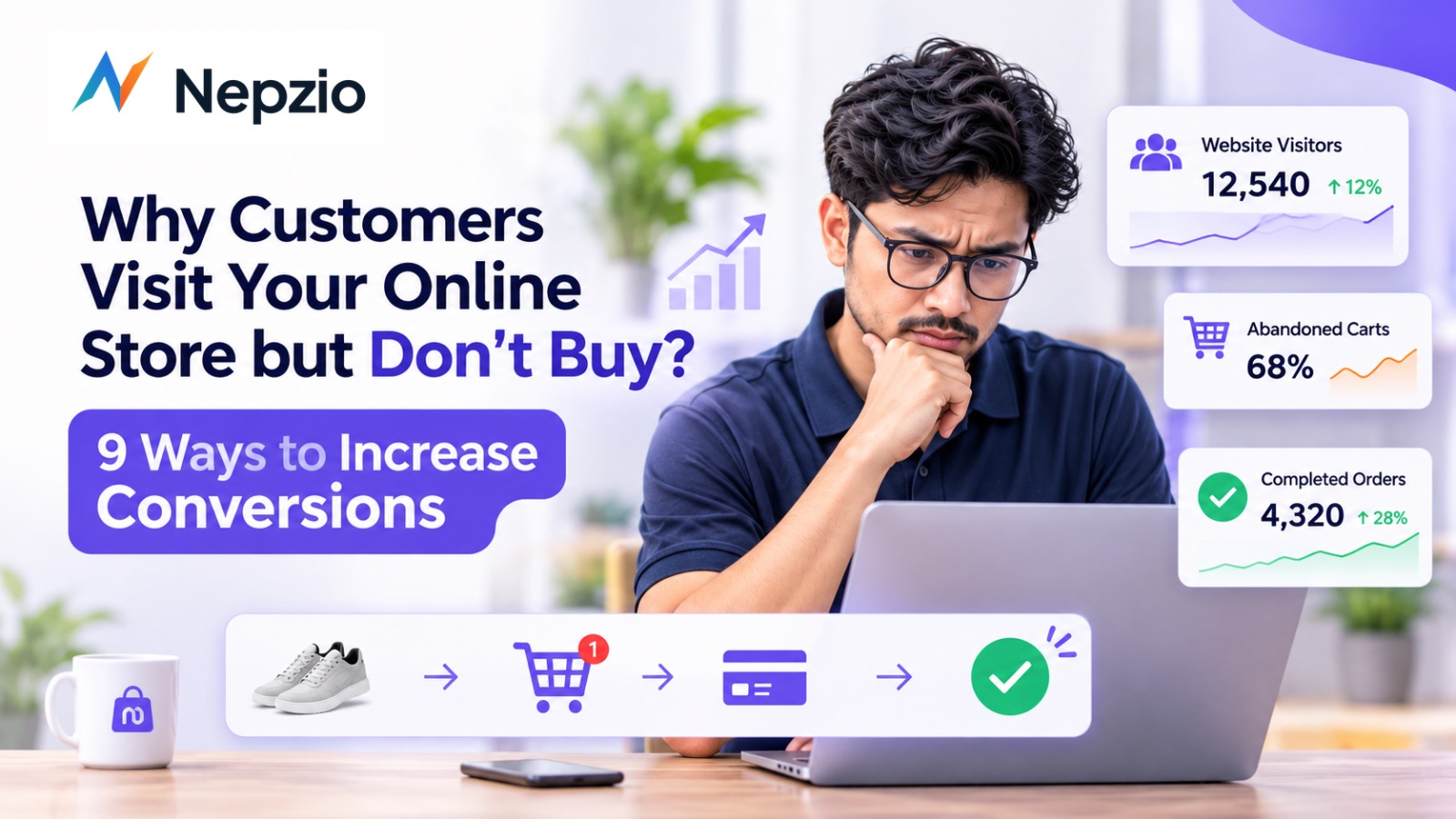
Getting visitors to your online store is only half the job. The real challenge is turning those visitors into paying customers.
You might be running advertisements, sharing product links on social media, or investing time in SEO. People visit your website, browse your products, and sometimes even add items to their carts. But when it comes to placing an order, they leave without buying.
Sound familiar?
This is one of the most common challenges in e-commerce. More website traffic does not automatically mean more sales. Your store needs to provide a shopping experience that makes customers feel confident, helps them find what they need, and makes purchasing as easy as possible.
Let's explore nine common reasons customers don't complete their purchases and what you can do to improve your store's conversion rate.
1. Your Product Information Isn't Convincing
When customers shop online, they cannot physically touch, examine, or try your products. They depend entirely on the information and images you provide.
A product with a simple name, one photograph, and a short description may not give customers enough confidence to make a purchase.
How to improve it:
Use clear, high-quality product photographs from multiple angles.
Write detailed and useful product descriptions.
Include important specifications such as size, material, color, dimensions, and compatibility.
Display available variations clearly.
Answer common questions directly in your product information.
Your product page should help customers understand exactly what they are buying.
Think of it this way: a good product page should answer most of a customer's questions before they need to contact you.
2. Customers Don't Trust Your Online Store
Trust is essential when someone is purchasing from a business they may have never interacted with before.
Customers might hesitate if your website looks incomplete, lacks business information, or doesn't explain what happens after an order is placed.
Some questions naturally come to mind:
Is this a genuine business?
Will my product actually arrive?
What happens if the product is damaged?
Can I contact someone if something goes wrong?
Is my payment information secure?
How to improve it:
Display your business name and contact information.
Add clear shipping, return, refund, and privacy policies.
Use secure HTTPS connections.
Show genuine customer reviews and testimonials when available.
Make your order confirmation and communication process clear.
Trust is not created by a single badge or statement. It comes from a consistent and transparent shopping experience.
3. Your Checkout Process Is Too Complicated
Imagine a customer who has already selected a product and decided to purchase it. They proceed to checkout but encounter too many forms, unnecessary steps, or confusing instructions.
They might simply leave.
A complicated checkout process creates unnecessary friction at the most important stage of the customer journey.
How to improve it:
Keep checkout forms short and straightforward.
Ask only for information required to process the order.
Clearly display the final price.
Make shipping charges visible before payment.
Provide clear instructions for completing an order.
Ensure the checkout works smoothly on mobile devices.
The fewer unnecessary steps customers encounter, the easier it becomes to complete a purchase.
4. Your Payment Options Are Limited
Customers have different payment preferences. Some prefer paying online, while others feel more comfortable paying when their products arrive.
If your store only supports one payment method, you may lose customers who prefer another option.
How to improve it:
Offer payment options that suit your target audience.
Depending on your market, these may include:
Credit and debit cards.
Digital wallets.
Bank transfers.
QR payments.
Cash on delivery.
Make sure customers understand which payment methods are available and how the payment process works.
A convenient payment experience can remove one more barrier between product discovery and purchase.
5. Delivery Information Is Unclear
Unexpected delivery charges and unclear delivery timelines are common reasons customers abandon their purchases.
A customer might be interested in a product but hesitate when they cannot find out how much delivery costs, how long it takes, or whether their location is serviceable.
How to improve it:
Display delivery charges clearly.
Explain estimated delivery timelines.
Make your delivery coverage easy to understand.
Provide tracking information when available.
Explain your return and exchange procedures.
If you work with multiple delivery providers, choose services that suit the destination, delivery speed, and cost.
Customers should know what to expect before they place an order.
6. Customers Cannot Easily Find What They Need
A large product catalog is useful only when customers can navigate it.
If products are poorly organized, categories are confusing, or search functionality is difficult to use, customers may leave without finding the item they want.
How to improve it:
Organize products into meaningful categories.
Use descriptive product names.
Add relevant product tags.
Make search easy to access.
Use filters for product attributes such as size, color, price, and brand where appropriate.
Highlight popular and relevant products.
Good navigation helps customers discover products without feeling overwhelmed.
7. Your Website Doesn't Work Well on Mobile
Many customers discover products through Instagram, Facebook, messaging applications, and mobile search.
When they click a product link, they usually expect the website to work perfectly on their phone.
If text is difficult to read, images take too long to load, buttons are difficult to tap, or checkout is inconvenient, customers may leave.
How to improve it:
Choose a responsive storefront design.
Optimize product images.
Keep navigation simple.
Make important buttons easy to tap.
Test the entire shopping journey on different screen sizes.
Avoid unnecessary popups and distractions.
Your online store should provide a consistent shopping experience across mobile phones, tablets, and desktop computers.
8. You Don't Follow Up With Interested Customers
Not every customer purchases immediately.
Some visitors need additional information. Others want to compare products, ask about availability, or discuss delivery before making a decision.
If your business receives inquiries through social media but doesn't manage them effectively, potential sales can easily be missed.
How to improve it:
Respond to customer inquiries promptly.
Keep track of conversations and interested customers.
Provide accurate product and delivery information.
Make it easy to continue a purchase after an inquiry.
Follow up appropriately when customers have requested more information.
Social media conversations are an important part of the buying journey. Managing them effectively can help turn customer interest into actual orders.
9. You're Not Measuring Your Store's Performance
You cannot improve what you don't understand.
If you only look at the number of website visitors or total orders, you may miss important problems in the shopping journey.
For example:
Are visitors viewing products but not adding them to their carts?
Are customers starting checkout but not completing it?
Which products attract the most attention?
Which traffic sources generate actual purchases?
Are mobile visitors converting differently from desktop visitors?
How to improve it:
Start monitoring meaningful e-commerce metrics.
Some important measurements include:
Conversion Rate
The percentage of website visitors who complete a purchase.
Conversion Rate = (Number of Orders ÷ Number of Visitors) × 100
For example, if your store receives 2,000 visitors and generates 40 orders, your conversion rate is 2%.
Cart Abandonment Rate
The percentage of shopping carts that do not result in completed purchases.
Average Order Value (AOV)
The average amount customers spend per order.
Traffic Sources
Understand whether customers are coming from search engines, social media, advertisements, referrals, or direct visits.
These measurements help you identify where customers are dropping off and which improvements deserve attention.
Turning More Visitors into Customers
Improving e-commerce conversions is not about one magic feature or marketing trick. It is about removing the small obstacles that prevent customers from purchasing.
Start by examining your own store from a customer's perspective.
Can they understand your products? Do they trust your business? Can they find what they need? Is checkout simple? Are payment and delivery options clear?
Even small improvements across these areas can make a meaningful difference over time.
Remember, attracting more visitors is important, but making the most of the visitors you already have is equally important.
Build a Better Shopping Experience with Nepzio
Managing an online business involves much more than displaying products on a website.
You need an effective storefront, organized products, convenient payment options, reliable delivery services, order management, and a way to communicate with customers.
Nepzio brings these essential commerce tools together in one platform.
With Nepzio, you can:
Create your own professional online store.
Manage products, categories, and inventory.
Accept orders and manage sales.
Connect payment gateways and delivery services.
Manage Facebook and Instagram conversations through Nepzio Inbox.
Manage physical store sales using POS.
Synchronize your products and orders with Daraz.
Manage your store through the Nepzio Merchant mobile app.
Use Zio AI to generate product descriptions and other store content.
Whether you're starting an online business or looking to improve an existing store, Nepzio gives you the tools to manage your commerce operations more effectively.
Your next customer might already be visiting your website. Give them a better reason to complete their purchase.
Create your online store with Nepzio
E-commerce that works.